
Jo Acty

Published on January 14 | Interview by Romina Provenzi | 5 min read
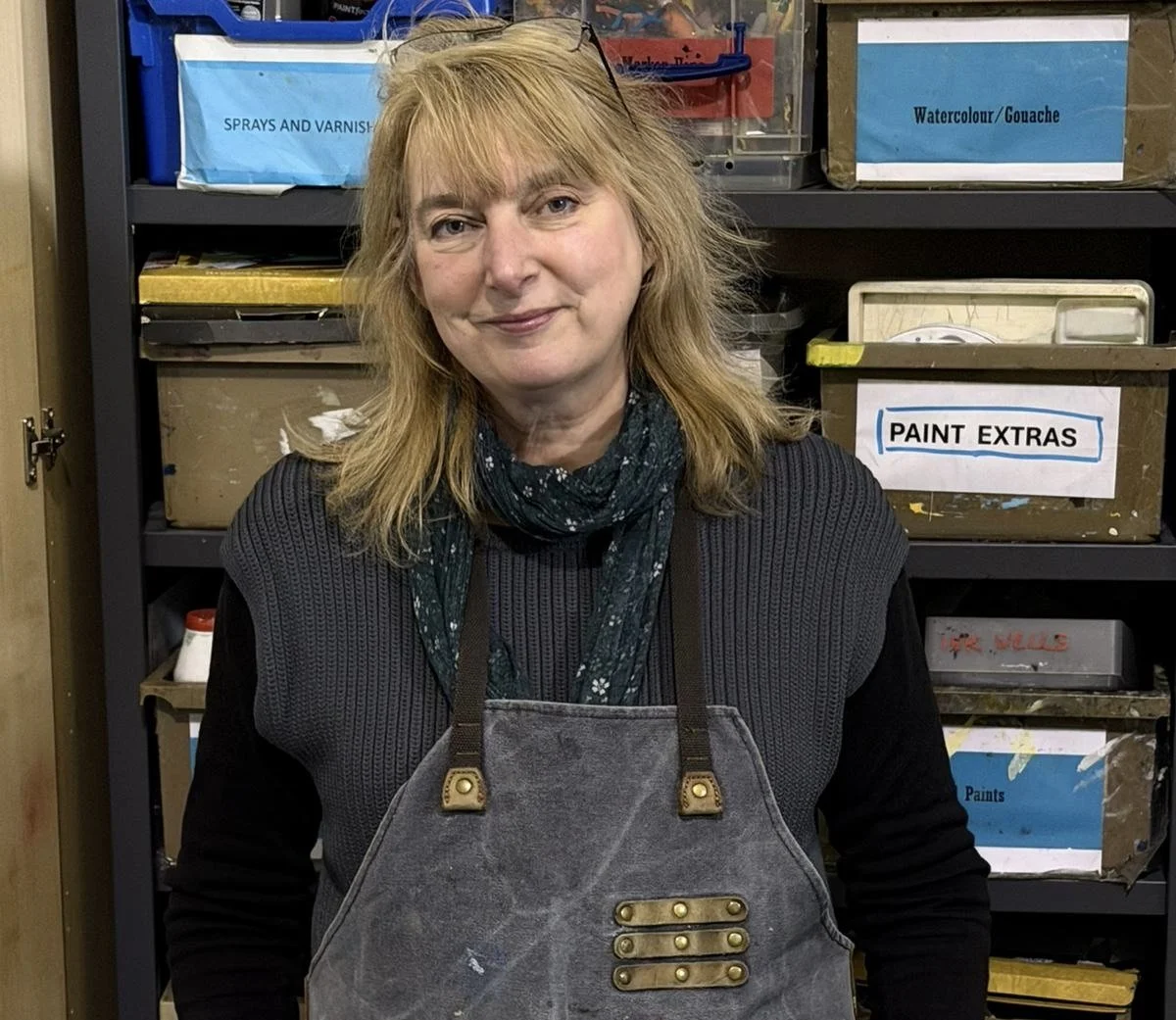
Jo Acty in the studio
@joacty
As a practising visual artist, Jo Acty works across various disciplines, including fine arts and education, on both personal, community and commissioned projects. Her personal work references themes such as identity and belonging, memory, storytelling, and the spirit of place. She is strongly involved in education and advocacy and is the founder of ArtWorks School of Art and Design, which was founded in 1989 in Oxford. Jo Acty studied Fine Art at Maidstone Art College, at the Winchester College of Art, and Oxford Brookes University, where she earned a BA in Fine Art and a Postgraduate Certificate in Education (Artist Teacher Practice).
Interview with Jo Acty: Artist Teacher on Creativity, Teaching and Learning
Where art and education meet
What does it mean to be an Artist Teacher?
I’m an artist and a teacher, and the two are together. Teaching art is a very creative process because you go through the same inner questioning and excitement that you experience in your own projects when you talk to your students about theirs. There is always the question of whether you can make more money and do something more profitable, but I love the buzz of being in the studio, which isn’t a classroom, and where we’re all artists as equals. In particular, I love seeing a young person who isn’t confident find themselves, and although it sounds like such a cliché, it isn't just about their artwork, as art ripples out into every other part of their life. Many former students aren’t practising artists now, but they are still making art in their downtime or doing something for themselves, which I think is really important. I should also mention that a lot of students have gone on to have very successful creative careers, as artists (including a Turner Prize winner), architects, designers, and in many other creative fields. As an artist teacher, I also hope I haven't lost my own sense of creating. I believe teaching and being an artist feed each other, and have done both for a long time.
Founding a school of art for children
You are the founder of Artworks School of Art in Oxford. Can you talk about your journey to open the art school?
I always loved art as a subject at school. It was my superpower while I navigated the difficulties of dyslexia. In 1985, I attended a foundation year at Maidstone College, then enrolled at the Winchester School of Art, which I left shortly after my first year, when I was 23 and pregnant with my first child. Because I needed an income to support our young family, I began occasionally teaching art to friends’ children in the back room at home. That quickly grew into teaching every day, then I added three sessions on Saturdays as well. It was just me teaching. We basically, lived in the front room, which, in hindsight, was very entrepreneurial. When we managed to find a first-floor studio with steep stairs up, no proper heating, but a little yard, everything became a bit more functional. Coming straight from college, I went from all the super high-level and colour theory to quickly realising that children just needed a space to learn how the materials worked. It was important to me to create a safe foundation for the children, a space where imagination and skills blend, allowing twists and turns in the process, with some dead ends, to help the young artist progress their unique vision. This can't happen if a child is given an outcome to replicate without ownership. I feel it’s a really important aspect, which also influences the adults we become: being able to trust our imagination, try new things and be fearless. At ArtWorks, I think the classes have become more than just teaching art, as you need to be sensitive to what the young person's going through, and it has become somewhere where they feel they can relax, open up, and be whatever they want to be. Imagination, creativity and innovation are core to our teaching.
Nurturing Young Artists: An Empathetic Approach
What is your approach to working with children and teenagers, and how has working with them shifted over the years?
I treat each student like an artist and an equal. I want to find out as much as I can about what they want from the classes, in the same way I would with adults. At the same time, I hope that we, the wonderful tutors I work with at Artworks, are empathetic enough topick upon whether it's what the students want to do or not in the sessions. At the beginning of the term, we always have a theme, and we might start with something quite structured, and a group project. By then, we've challenged the children to think about whatever they're interested in and to add an extra layer of themselves to it. For example, I don’t think it is enough to copy from a picture; it’s paramount to reflect on why they chose a particular image. Does the picture say something to you? Would you like to change the picture? Is it personal to you? Is it telling a story? These are the kinds of questions that help the child to think about why they're doing something, as an artist would do. We're not going to say, for example, that we're going to make a penguin that is going to look like this. Instead, we might start with layers, talk about it, and let it become something else. But sometimes, it just needs to be pure play. I was inspired by the ‘Ruth Asawa: Citizen of the Universe’ exhibition at Modern Art Oxford in 2022, including the film of her work with the children. I admire Ruth Asawa’s work, educational philosophy and approach because she was able to balance her art practice, family and community work too. As an artist teacher, I am always learning from myself and my students, and I still have the same thrill of a new project that I've had since the start.
Reflections on this conversation
Perhaps most moving is Jo Acty's awareness that her classes "have become more than just teaching art" and that young people come to ArtWorks seeking "somewhere where they feel they can relax and open up, and be whatever they want to be." Many of her former students aren't practising artists now, but they still make art "as their downtime, doing something for themselves." This ripple effect suggests that success might be measured not in professional outcomes but in sustained creative confidence thanks to the willingness to trust your imagination throughout your life. After several years into her art career, Jo Acty still describes feeling "the same thrill of a new project that I've always had since the start." For an artist-teacher navigating the intersection of personal practice, pedagogy, and entrepreneurship, this sustained enthusiasm feels like its own form of success and proof that teaching and making art can feed each other, that the buzz of the studio remains even when that studio is also a school
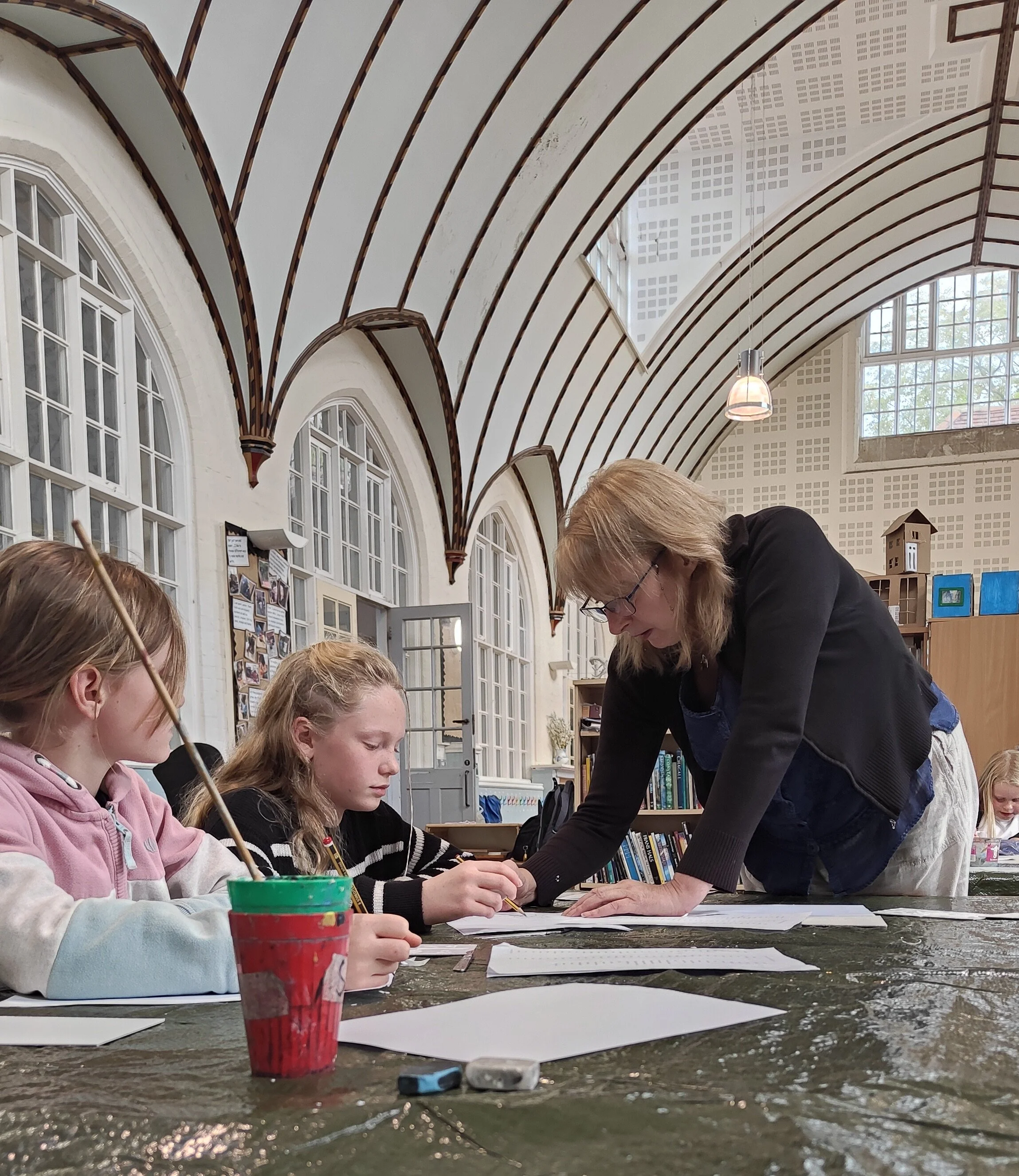
Jo Acty during a session at ArtWorks school of art
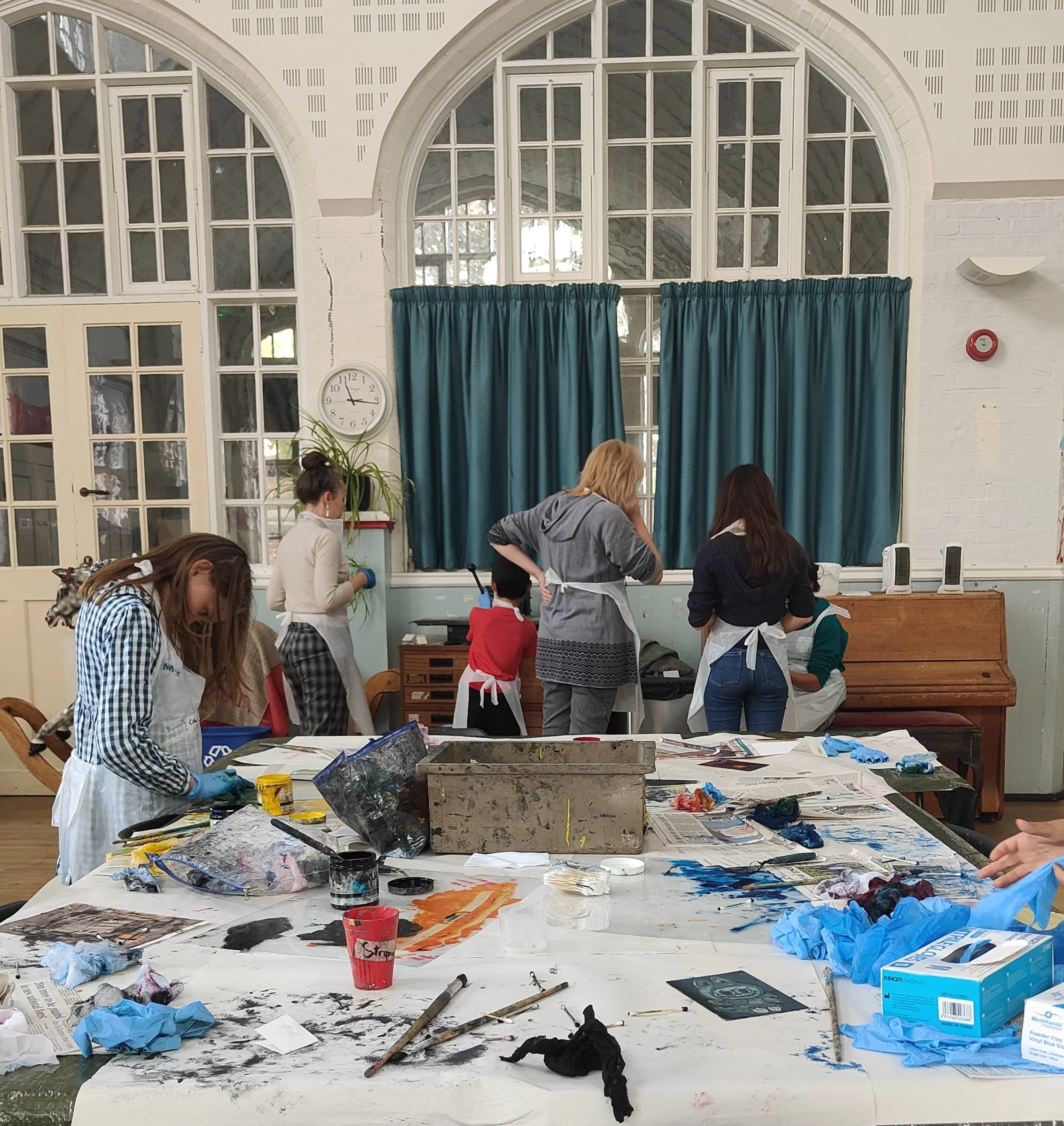
Jo Acty during a session at ArtWorks school of art
If you enjoyed this conversation, please browse through other interviews:
American artist Teresita Fernandez is not interested in illustrating her identity in Elephant magazine
Rana Begum:Seeking the Essence - interview published in Printmaking Today
“an espresso with…” series of interviews with female artists, curators and arts professionals
Explore more interviews and reviews in my Portfolio, or subscribe for free to receive new interviews
