
Katie Taylor

Published on March 5 | Interview by Romina Provenzi | 5 min read
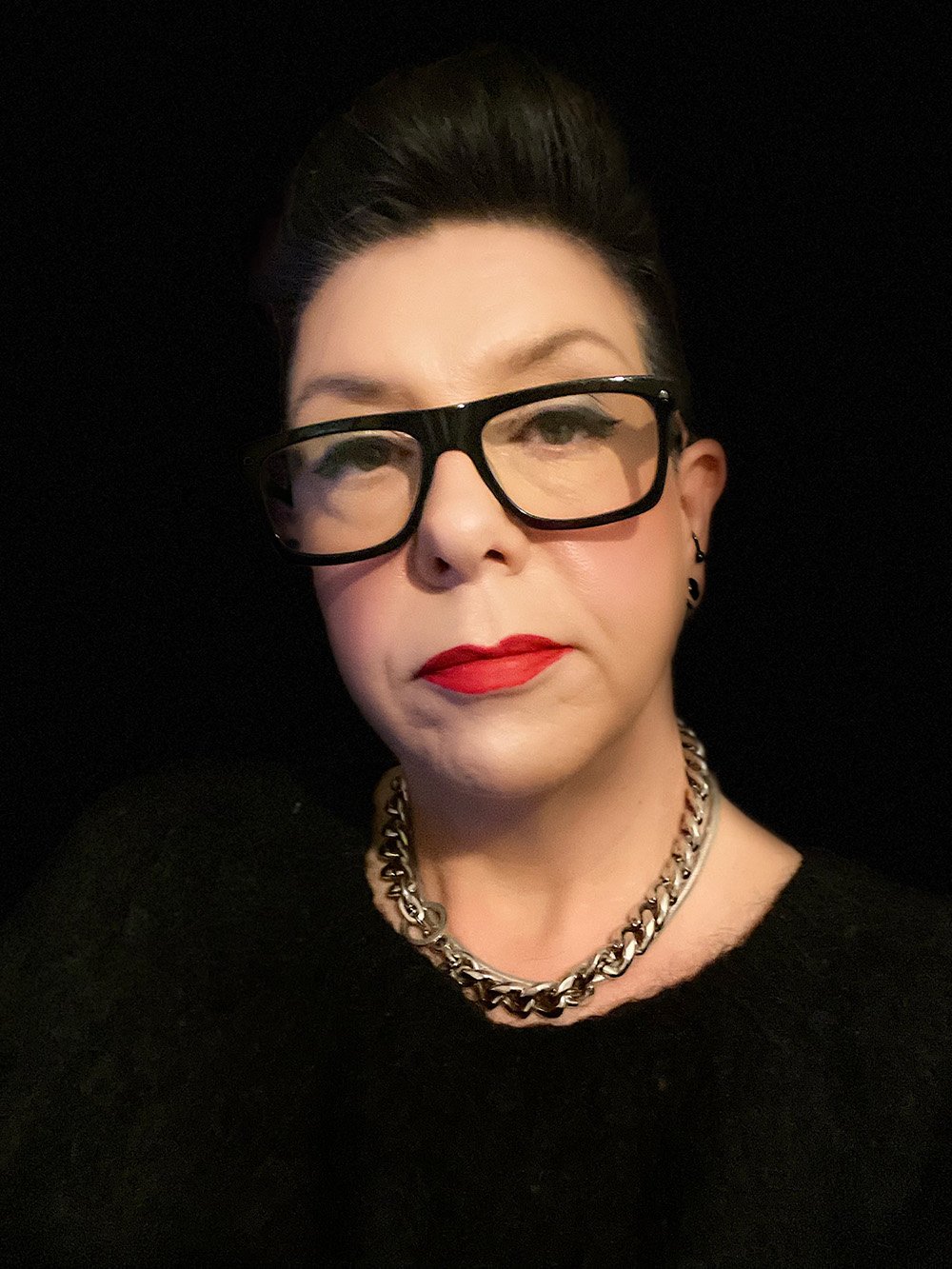
Katie Tayor. Self-portrait taken by the artist.
www.kmtaylor.co.uk - www.instagram.com/bigtangle/
Katie Taylor is a UK-based contemporary artist and PhD researcher at Oxford Brookes University. Her sculptural and installation work draws on forensic anthropology, material culture and social justice, examining themes of absence, identity and the politics of care. Working with materials including pewter, leather, clay, bioplastics and found objects, she explores how objects can hold memory and act as witnesses to marginalised lives, particularly in relation to hidden homelessness and unidentified human remains. Alongside her studio practice, she develops participatory projects and workshops that use material processes to support reflection during periods of personal and social transition.
Interview with Katie Taylor: artist on Forensic Sciences and Catalyst Moments
Art Was in My Blood
Why have you chosen art, among all other paths of life?
Art was in my blood, and there was no other option for me. In fact, I really struggled at school, and I left with just an A-level in art and didn’t go to art school. I had never had the chance or the opportunity in that moment of my life. Instead, I went to university in my mid-thirties, after both of my parents had died, and while raising two young children. At that stage, art was really important to get me through a transitional moment in my life, having my parents die six months apart, after a protracted ten-year struggle with their alcoholism, which had been increasingly difficult to deal with. I was knitting a lot, which led me to the Textiles undergraduate degree at the Open College for the Arts, and I was their first student to get a first-class honours degree in Textiles. It was back then when I started exploring the topic of death and met a forensic anthropologist, Jelena Bekvalac, Curator of Human Osteology at the Museum of London, who showcased the ability to understand somebody's life from the bones they left behind. It was a catalytic moment that then led me to look at the genocides in Bosnia and Herzegovina to work on the topic of identity within human remains. Consciously, I didn't want my practice to be about my own story.
Proving Myself
Why commit to a PhD at a later stage in life?
I always had a sense that teachers and even my own parents thought I was stupid, potentially. Then, after my mother died, I found a sentence about me in her diary, “Katie was never as bright as Emily”, who is my sister. This was definitely a catalyst moment to find my creative side, which had been lost somewhere in the midst of having children and battling with two alcoholic parents. Basically, my PhD is to prove myself and to respond to everybody who thought I was stupid, because I knew that I wasn't, but there was always pressure to learn at school in the same way everybody thought I should. It is also very much about the opportunity to deeply research forensic sciences from a fine art perspective, which I have become utterly fascinated with. I am exploring the topic of unidentified human remains, looking at belongings to pick out an individuality from the data stored on a missing person's database, to bring humanity to it, as these were people with their own stories.
Chasing the Next Challenge
What’s success for you as an artist?
Success is chasing the next slightly bigger thing than the last one. I've exhibited in China, so exhibiting in more countries and further fields could be good. I'd love to work on a coffee table-type book. It isn’t about selling or making huge amounts of money, absolutely not the case for me, and I don't aspire to be represented by a gallery, either. I think it's probably always just about getting to the next challenge, the next opportunity, whatever the next stage is. I don't have my sights set on anything in particular yet, but I think just constantly challenging your mind is success.
Reflections on this conversation
Talking with Katie feels like sitting with someone who has quietly carried a great deal but turned it, piece by piece, into something meaningful. There's an honesty to the way she speaks about her life that makes you want to lean in. What stays with you is the diary entry. A mother's words, discovered after her death, could have been devastating. But rather than being defined by that wound, Katie seems to have metabolised it into something driving and purposeful. There's something both heartbreaking and deeply human about that. She talks about not wanting her practice to be about her own story, and yet her story translates into her fascination with identity, with what remains, with the traces people leave behind. It’s like transforming the personal into something that speaks to all of us. Her idea of success is refreshingly gentle. No gallery, no fame, just the next challenge, the next door to push open. In a world that often measures achievement in volume and visibility, there's something quietly radical about that. Above all, Katie strikes you as someone who found herself later than some, but perhaps more completely. And who is still, with great curiosity and courage, in the process of becoming.
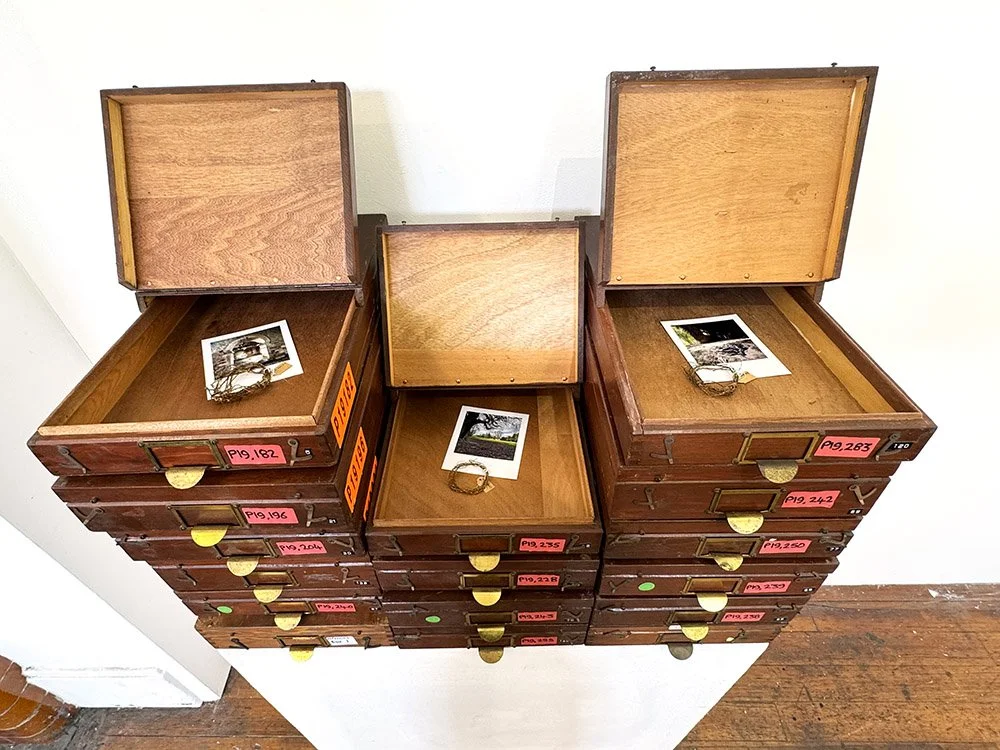
Like a Skeleton, 2025. Image taken by Katie Taylor
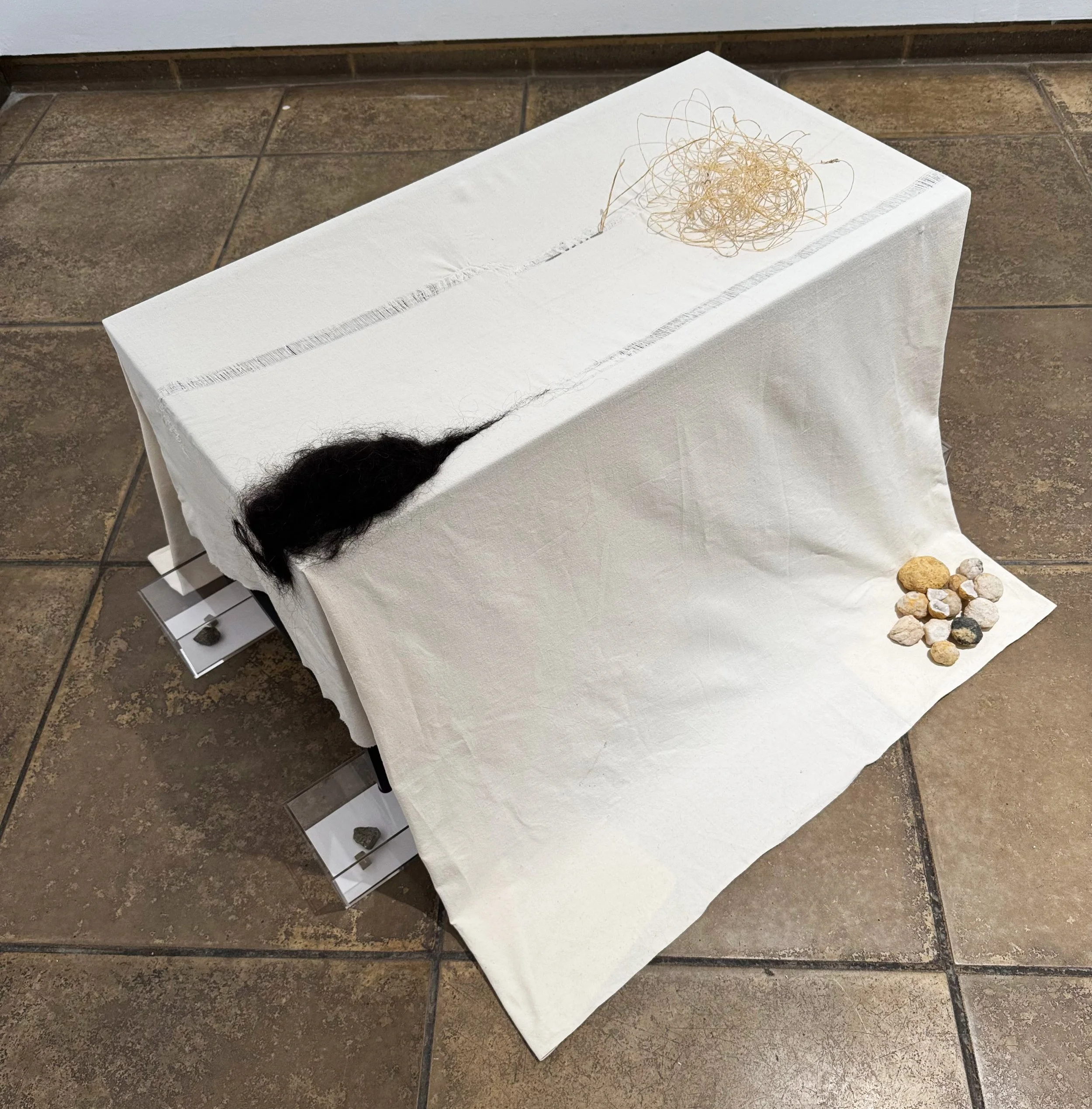
Social Fabric, 2025. Image taken by Katie Taylor.
If you enjoyed this conversation, you might also like my interviews with other artists working with photography:
Carey Young in Photomonitor
View all “an espresso with…” interviews
Explore more interviews and reviews in my Portfolio, or subscribe for free to receive new interviews
