

Published on April 24 | Interview by Romina Provenzi | 5 min read
This interview was produced with the support of MAC, Midlands Arts Centre, which covered the editorial fee and travel to Birmingham for the interview. Artist selection and editorial decisions remained entirely my own.
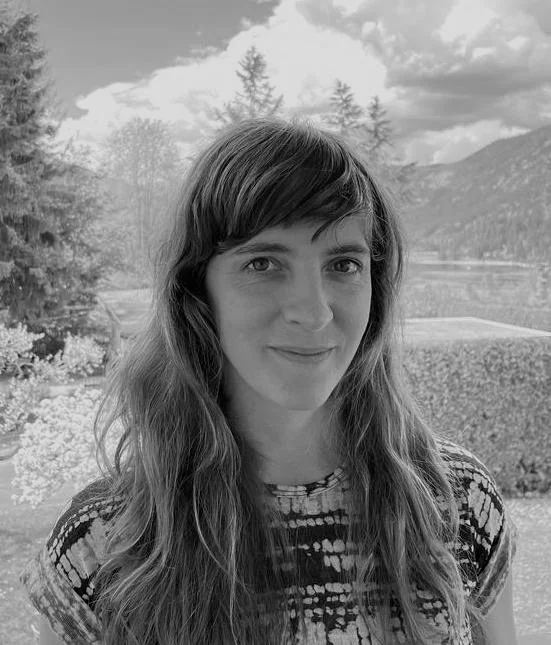
Portrait of Genevieve Robertson
IG @genevieve_robertson
Genevieve Robertson is a British/Canadian artist based in British Columbia who works at the intersection of visual art and environmental studies. Her practice is grounded in drawing and painting, extending to video, installation, and various forms of collective work and collaboration. Robertson holds a BFA from NSCAD University (Halifax, Canada) and an MFA from Emily Carr University (Vancouver, Canada). Her practice has received international support through exhibitions, publications, symposia, and residencies.
Interview with Genevieve Robertson: artist on ecology and fieldwork
Art and Ecological Values
Ecological values are at the heart of your art practice. Can you explain what they are and how you apply them in your work?
I grew up partly in Vancouver and in tree-planting camps in British Columbia. As a young person, I was exposed to living in nature in the bush in camps outside the city, where I saw the desecration and the widespread effects of the forestry industry on the environment. Witnessing the logging in British Columbia from a young age has certainly infused the way I think about nature and put ecological values at the heart of my art practice. In my drawings and paintings, I look at how nature has been represented over time, and some of my earlier works adhere to a simple figure-ground relationship seen in traditional botanical drawings, but my work has changed as I have developed as an artist. In my exhibition ‘Under the Orange Sticks of the Sun’ at the MAC, Midlands Arts Centre, in Birmingham, the title of my recent work ‘How Light and Soil Are in Us (swamp and slope), 2025’, was drawn from a passage in the ecofeminist writer Susan Griffin’s book ‘Woman and Nature: The Roaring Inside Her’ that tells the perspective of the trees, imagining what these trees are thinking. Now, when I'm drawing trees, I'm trying to get into their tangled, wild nature, rather than thinking about how they'll be viewed as a landscape, although I’m still struggling to break down the human-centric viewpoint, which is so intrinsic to how we learn about art.
Plants, Language and Indigenous Knowledge
You live and work in Ky̓ʕamlúp (colonially known as Nelson, British Columbia), territory of the sn̓ʕay̓ckstx Sinixt Confederacy Arrow Lakes peoples. Is this an important element for developing your environmentally engaged art practice?
I've been living in Nelson for eight years, a ten-hour drive from Vancouver and its vibrant artistic community. The indigenous people who have lived in this territory for thousands of years were pushed off the land and deemed extinct by the federal government of Canada, until a few years ago, when they gained some legal rights back in their homeland. This represented a monumental seismic shift around them, coming back. I am slowly connecting with the Sinixt leaders, and I have started to build trust. While making botanical paintings of twelve plants from the Monument Creek Wildfire, I wanted to understand how these plants are connected to the people of this place. With help from Christopher Parkin, Principal of the Salish School of Spokane in Washington State, and author and friend Eileen Delehanty Pearkes, I learned the plants’ names in the Salish language and their meanings. I gained permission to include these names in the titles, next to the Latin and English names, to bring a local perspective to the work. It felt really meaningful to include this cultural context, which contains so much ecological knowledge embedded in the names and associated meanings.
Balancing Studio Practice and Fieldwork
Your art practice is based on studio practice and fieldwork. Is one more relevant than the other to your work?
They're both equally important in my practice, as they are part of a cycle. There’s a balance of going out, gaining an understanding of a place, and trying to bring what I've gathered back to the studio. The majority of works included in my exhibition at MAC are based on my fieldwork at the remote Monument Creek Wildfire, an area that I visited regularly over four years. The first time I went there, the fire was still burning. In Canada, we have wildfires every summer now, and it was a bad year when I went to the wildfire site for the first time. Our whole town was covered in a thick layer of smoke, but I also felt my practice was hard to grasp, and I needed to utilise my methodologies to work in any way that I could, having just had twin babies. I am not a scientist, and my fieldwork is about travelling through the landscape on foot and stopping to record, draw, write and letting things seep in. So it’s been amazing to see how a landscape recovers, and observe these plants come back in the brief time I was able to be there. But sadly, the real regeneration needed to fight the climate crisis is going to take longer. Recently, Canadian geneticist and broadcaster David Suzuki said there’s a need for a spiritual and cultural revolution for science to be valued and taken seriously, which can then lead to environmental change. Through my work as an artist, I hold curiosity about uncovering the world, which involves knowledge and science, but also this reverence for our environment, which has a spiritual component to it.
Reflections on this conversation
Genevieve Robertson's practice is a form of deep listening to the land, to the plants, to the people who have known this territory for thousands of years. Her work reminds us that art can be an act of humility, of unlearning, and of finding new ways to be in relationship with the world around us.
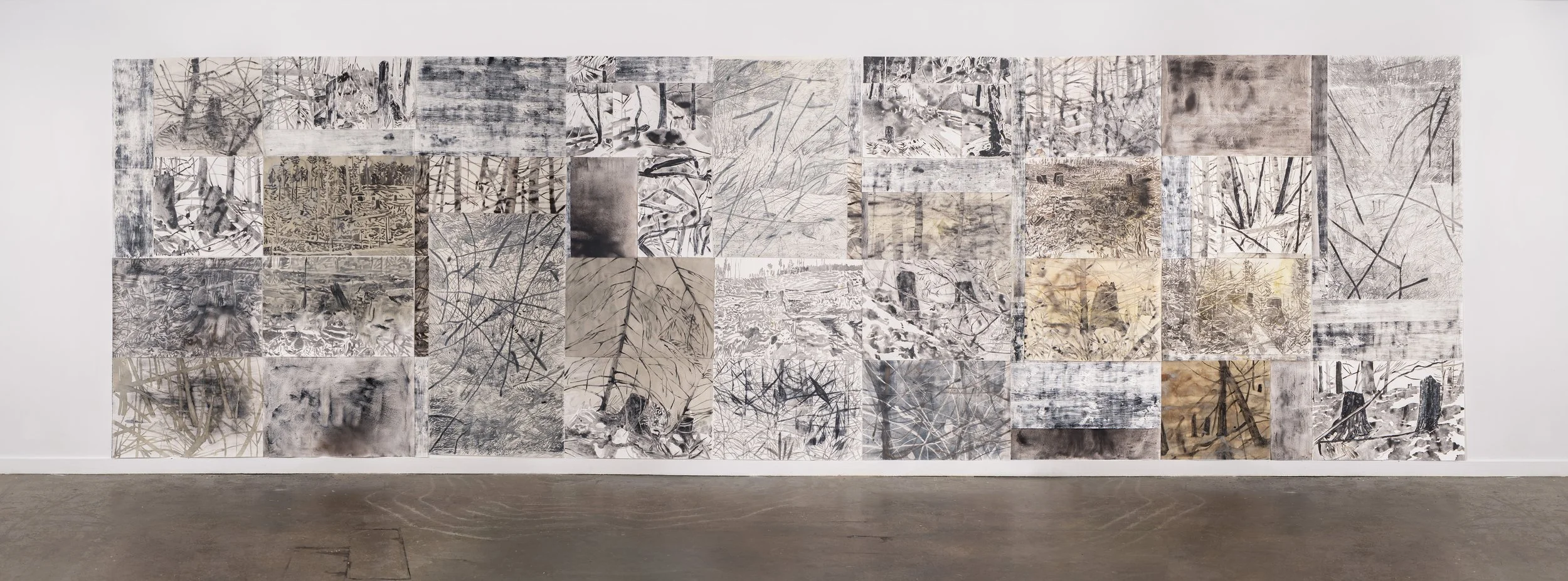
How Light and Soil Are in Us (swamp and slope) , 2025
Ink made from charcoal, willow, fireweed, alder, carbonised soil, and elderberry, collected at Monument Creek Wildfire
(clearcut R14738) on Sn̓ʕay̓ckstx (Sinixt) Territory BC, coal from Black Country Living Museum, Dudley, UK, and carbon black
ink on paper. 304.8cm x 1005.84 cm; 59 pieces, various sizes.
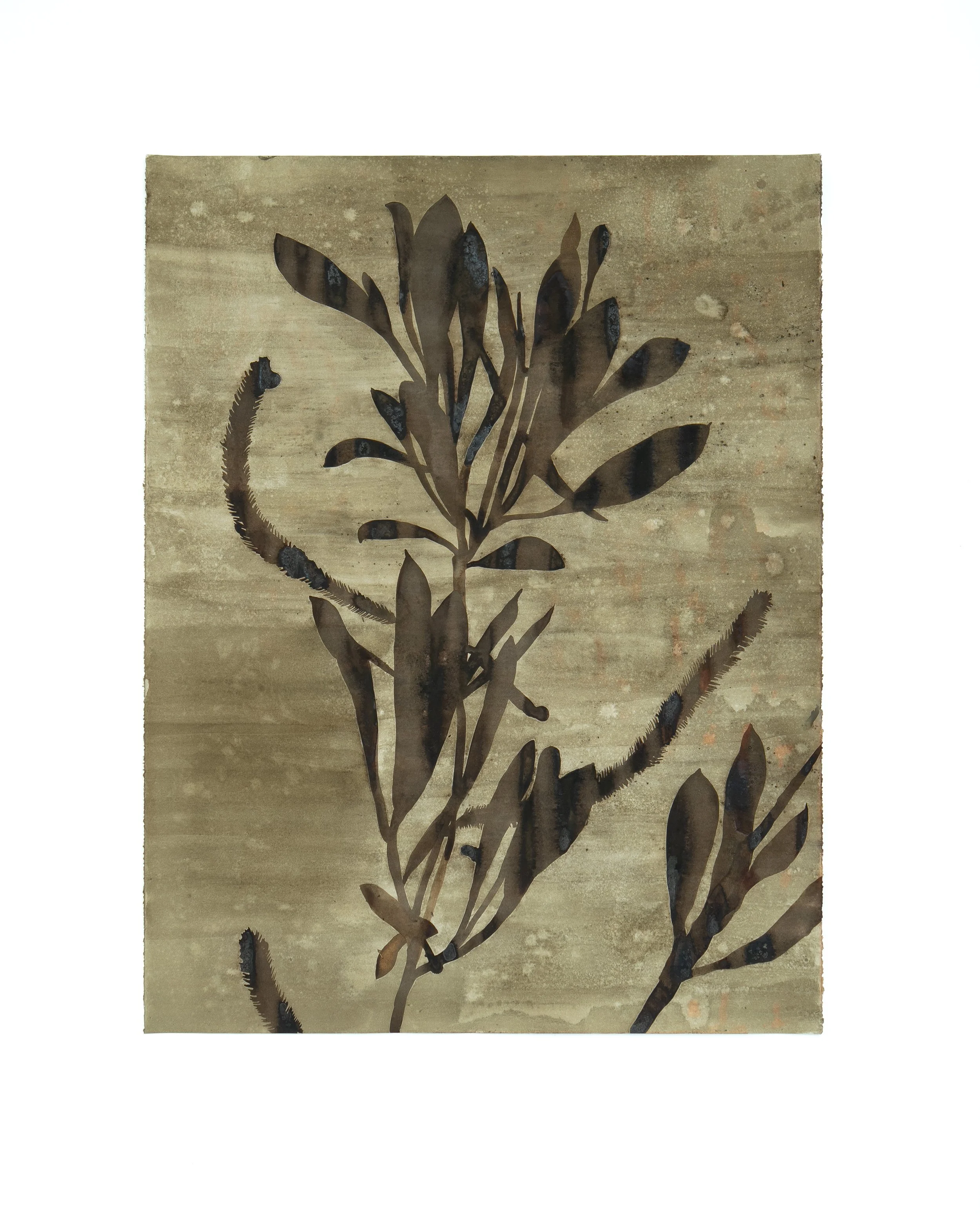
Scouler’s Willow, pax̌ʷpəx̌ʷɬp, “spread out plant”, (Salix scouleriana), 2025
Ink made from Scouler’s willow and saddened goldenrod ink on paper. Materials collected at Monument Creek Wildfire (clearcut R14738) on sn̓ʕay̓ckstx territory, BC.
127cm x 96.5cm
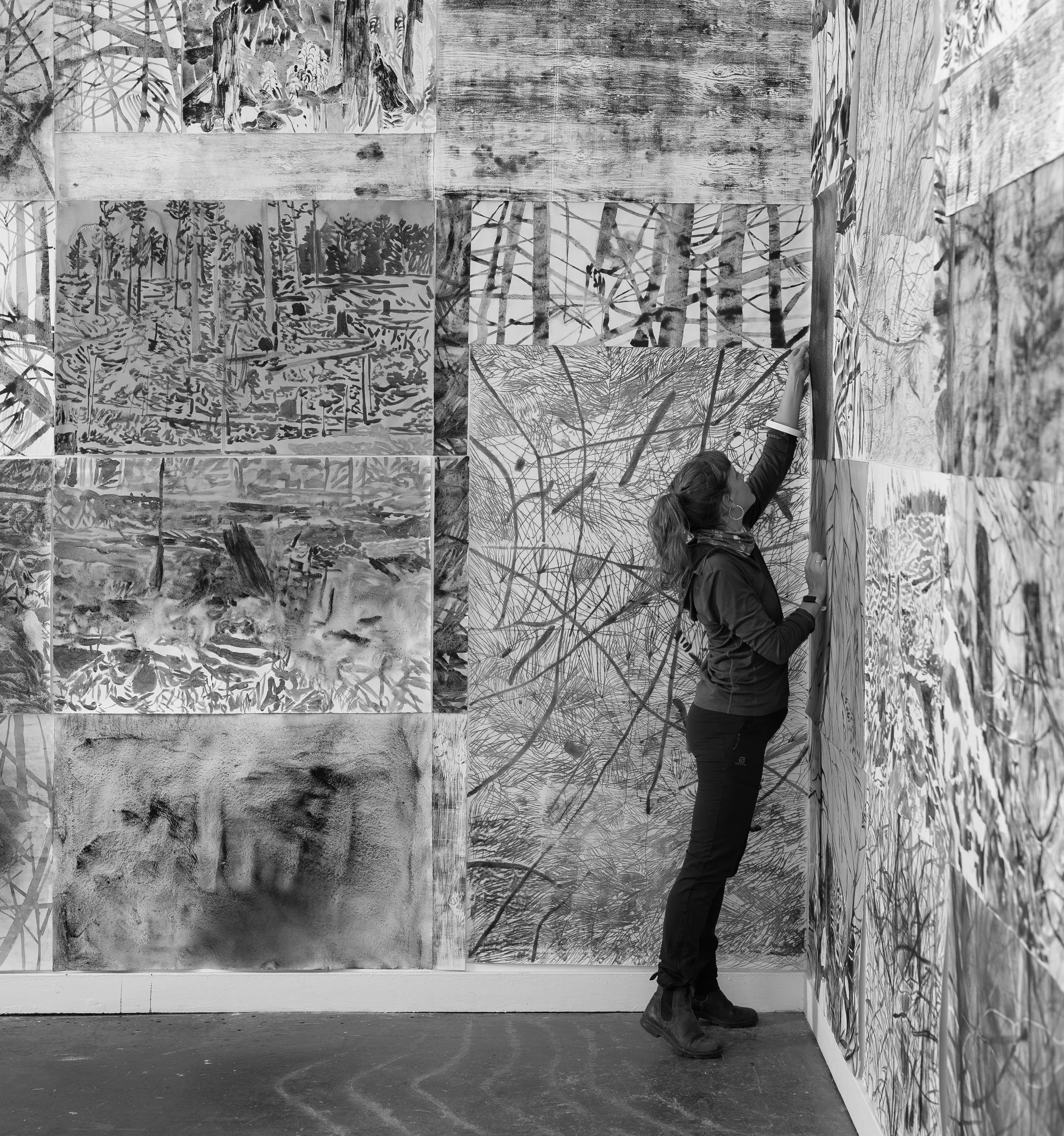
Studio view
You might also enjoy:
Interview with artist ‘Rana Begum: Seeking the Essence’ published in Printmaking Today
Interview with artist ‘Yoshitomo Nara: Lesson in Clay’, published in Elephant magazine
Interview with artist Emma Talbot, ‘What I create is bound up with being a woman’, published in Wallpaper magazine
an espresso with… an ongoing series of interviews, please SUBSCRIBE to receive updates
Explore more interviews and reviews in my Portfolio, or subscribe for free to receive new interviews
