
Daisy J Hung

Published on December 2nd | Interview by Romina Provenzi | 5 min read

Daisy J Hung, author of the non-fiction book ‘I Am Not a Tourist’, signing books at HarperCollins
Daisy J Hung is the author of “I Am Not a Tourist” by HarperCollins. She works as the Head of Equality, Diversity and Inclusion in the Mathematical, Physical and Life Sciences Division at the University of Oxford. As a person of Chinese descent, born in Canada with family from Hong Kong, raised in California, and now settled in Oxford, UK, her sense of identity has shifted over the years and in new contexts. Daisy is a self-taught artist who works with embroidery as a medium to express complex cultural experiences, and has shown her works at the Old Fire Station in Oxford recently.
Interview with Daisy J Hung: "I Am Not a Tourist" Author on British Chinese Experience and Art
The Story Behind 'I Am Not a Tourist': A Book on Belonging and Identity
Your non-fiction book ‘I Am Not a Tourist’ is about British Chinese identity and people's personal experiences. Can you give us a glimpse into it?
The title of my book and its opening scene are drawn from personal experience. Some years ago, I was standing in the queue to buy a ticket at the Ashmolean Museum in Oxford, and the museum staff asked each visitor in front of me to fill out a form for Gift Aid. Once it was my turn, they assumed that I wasn’t a UK taxpayer, which made me feel like I don’t belong. Similar situations happen regularly, which is a subtle and constant reminder of being an outsider, no matter what passport, what documents, or what status you have. Just by looking at you, you're seen as a foreigner, and this can make you feel like you don't belong. When I moved to the UK, I needed and wanted to find other people, hear different stories, understand the history of immigration and the research behind why the communities are as they are today, because I have a desire to understand histories that aren't centred in mainstream due to my background in ‘Ethnic Studies and Asian American Studies’. This is why I wrote my book ‘I Am Not a Tourist’ to explore British Chinese history and personal experiences in the present times. Having relocated to Oxford from California about thirteen years ago, it was a culture shock, and I felt more isolated from people who looked like me, Chinese, as I didn't see people like me on television, in politics, or in my workplace.
From Personal Experience to Social History: Writing British Chinese Narratives
Is your book a way to find your voice?
Actually, I wrote the book to provide a platform to the Chinese British communities and other diverse underrepresented communities in this country. For the book, I interviewed nearly 40 people of Chinese descent in the UK to share their stories. Initially, I didn't intend to include much about my own story until my editors strongly recommended it, which is why I still feel hesitant to see the book marketed as a memoir. In fact, my book is about social history, research, and other people's stories because I wanted to show a more diverse, fuller picture of what British Chinese communities are in reality. We’re not a monolith, and I wanted to narrate the wider range and diversity present within our communities. For this purpose, I've interviewed a wide range of people, including artists. Being an artist myself, I've been expressing my ideas and perspectives through art too. I work with hand embroidery, something I taught myself before a planned surgery, because I didn't want to look at screens for a couple of weeks while recovering in bed. After learning, I started experimenting with it and exhibiting my work.
Creating Cultural Change Through Diversity and Inclusion
How can a culture shift help society to recognise that diversity is positive?
I work in equality, diversity, and inclusion at the University of Oxford, which involves a lot of talking and actions about inclusivity, belonging, and curiosity for others and their experiences. Inclusion is all about being grounded in empathy, understanding people and walking in their shoes, but it also requires openness to want it and be able to change. Without that, it's problematic. All that I'm doing with the book, with the embroidery, with my day job is about getting people to see things in different ways, to understand that there are more perspectives than just one and it is all really complex. There are not necessarily simple answers to things, but we could start approaching situations with openness, self-awareness, and also challenging established narratives, the status quo, stereotypes and assumptions we make.
Reflections on this interview
What strikes me most about Daisy's work is the intentionality behind it. "I Am Not a Tourist" isn't simply a memoir but an act of community building. By interviewing nearly 40 people of Chinese descent across the UK, Daisy has created something rare: a platform that reveals the beautiful complexity within communities often reduced to stereotypes or rendered invisible altogether. She experienced small but potent microaggressions that accumulate over time. These moments remind us that belonging isn't just about legal status or documentation; it's about being seen, recognised, and included in the everyday fabric of society. Perhaps most inspiring is how Daisy channels her experiences into her hand embroidery, which she taught herself during recovery from surgery. We often find our most powerful forms of expression when we're most vulnerable.
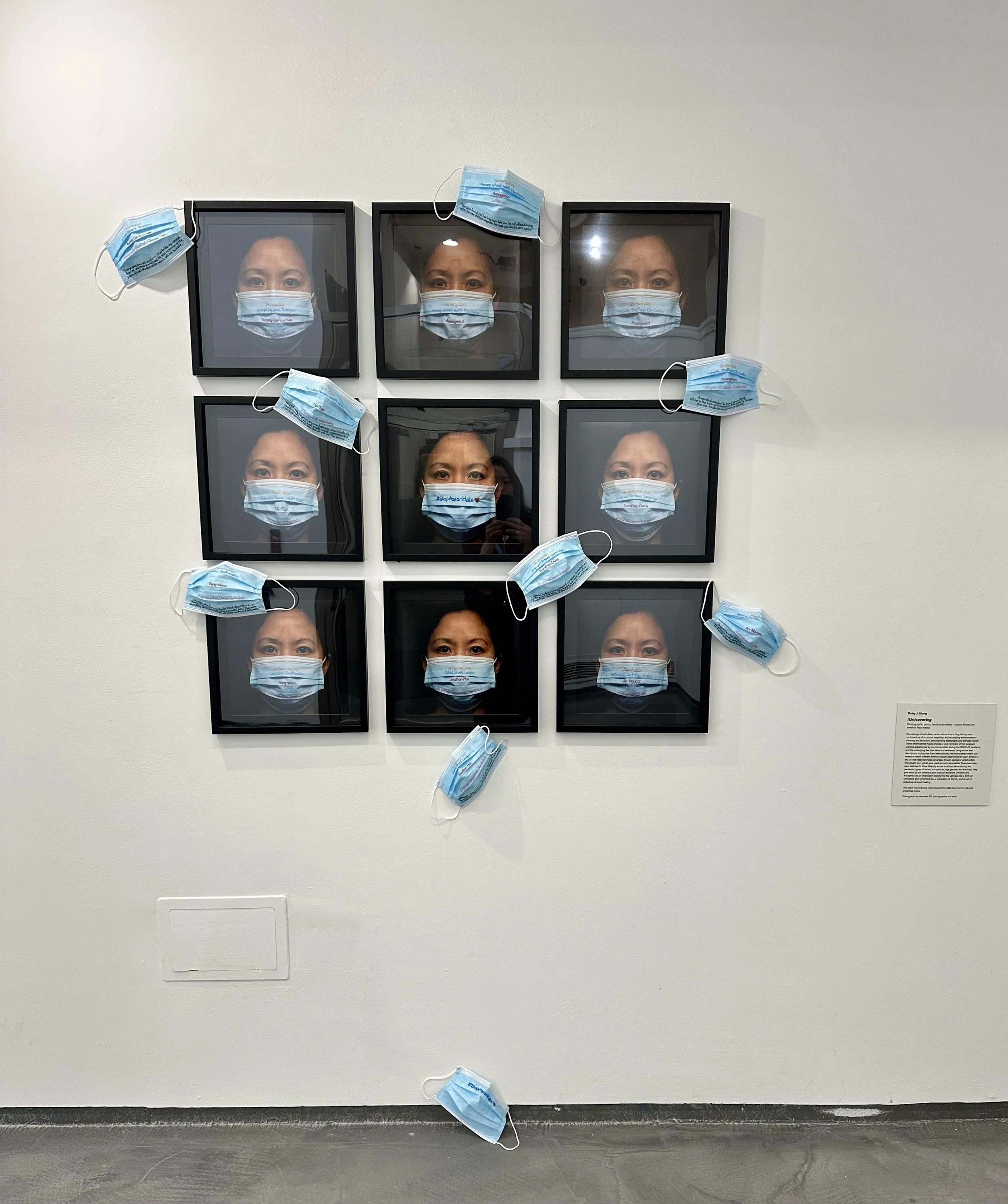
‘(Un)covering' rather than Masks’ by Daisy J Hung. Photo credits Hermeet Gill
ESEA Community Hub commissioned the work
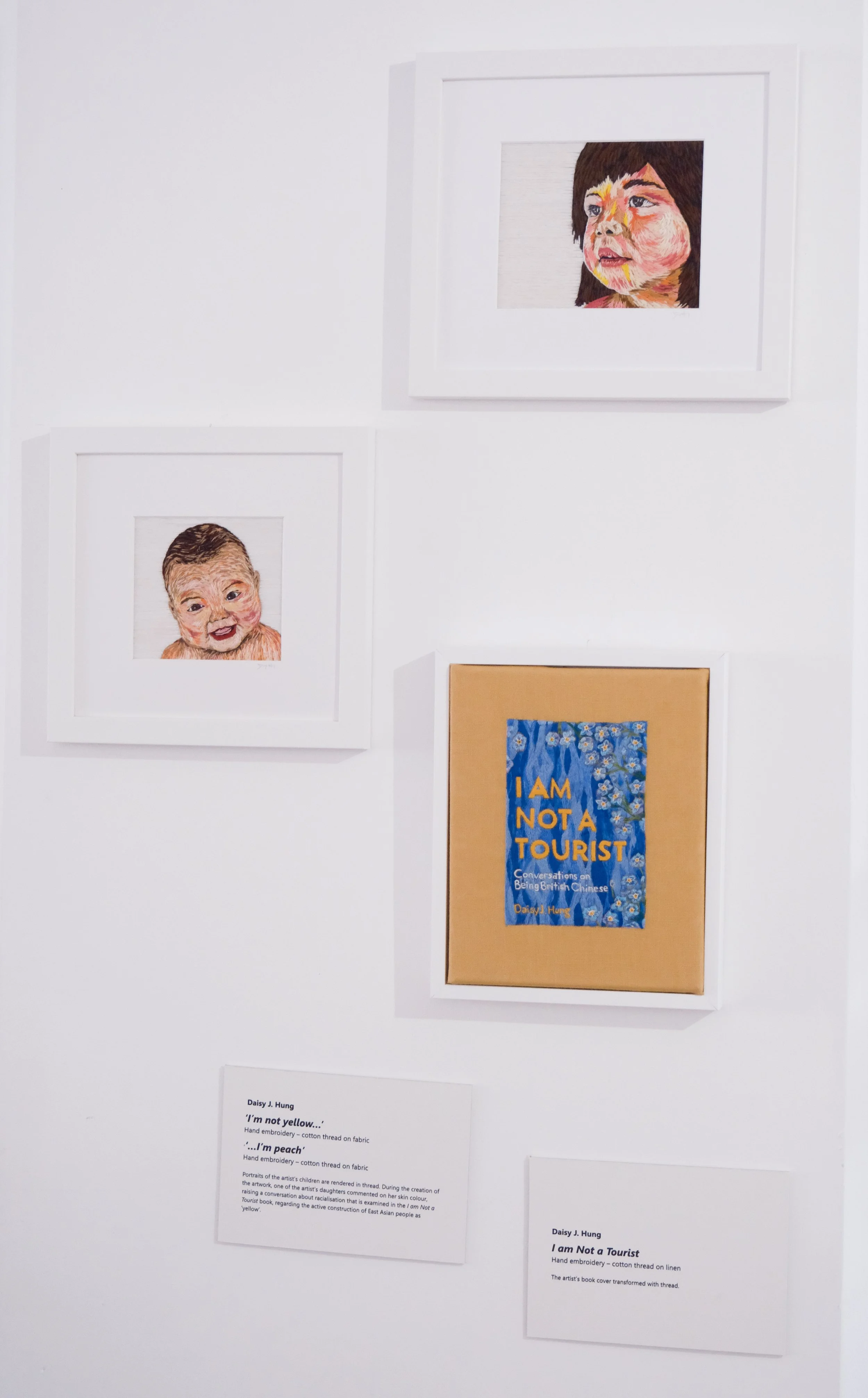
Embroidery works by Daisy J Hung on show at the Old Fire Station in Oxford
If you enjoyed reading this interview, you might also like:
Yayoi Kusama: My Eternal Soul exhibition at the National Art Centre, Tokyo, review published in Elephant magazine
Jake Grewal interview published in Elephant magazine
Emma Talbot interview published in Wallpaper magazine
an espresso with… series of ongoing interviews
Explore more interviews and reviews in my Portfolio, or subscribe for free to receive updates and new interviews
